Thursday Three - 10 11 2022

  • The 2022 AAG Conference, Adelaide a few words from our Conference Chair – Lui Di Venuto
  • Conference Workshop – Recognition at last: Inclusive communities and services for people ageing with post polio syndrome! 
  • Vale: Courtney Hempton

Warning: Aboriginal and Torres Strait Islander readers are warned that this article contains an image of a deceased person

The 2022 AAG Conference, Adelaide a few words from our Conference Chair

As we finalise arrangements for the 55th AAG conference, to be held in Adelaide on 22-25 November 2022, it’s timely to reflect on the value of coming together in person for the first time since 2019. Back then, none of us knew what the next few years would bring, as the world was blindsided by COVID-19. And now, as we tiptoe towards ‘living with COVID’, we’re all making sense of our own ‘new normal’, as we continue to adapt our daily habits to the pandemic.

Pre-COVID, conferences were opportunities to come together to share knowledge, learn and network. For some, conferences were a welcome break from our usual routines. Most likely, most of us wouldn’t have given much thought to travel arrangements and bustling crowds. Of course, that’s all changed. With just a few weeks until the conference, many of us are considering whether to travel and the extent to which we can (or should) maintain our social distance. Rather than looking forward to social interaction and networking, we’re wondering about shaking hands or wearing masks.

In response to COVID, virtual events and networking have emerged as viable alternatives to face-to-face events. Digital transformation – not without its challenges – offered new ways to share knowledge and e-meet colleagues.

Although well-designed virtual conferences offer formal options for interaction, it’s clear that face-to-face events are better when it comes to informal engagement and meeting potential or current collaborators. That said, there’s growing evidence in favour of a hybrid model, whereby on-ground live attendance is integrated with virtual attendees through features like live audio and video chats, polls, surveys and even games. Those of you who have reviewed the program for AAG 2022 will have seen that the conference includes almost 50 additional online presentations. These oral presentations, plus poster presentations, will be accessible via an app and online platform.

Despite more options than ever to access and participate in hybrid and virtual events, there’s still nothing like personal attendance for reconnecting with your peers. The direct and indirect value of face-to-face events goes way beyond marketing and budgets. Perhaps that’s where the term ‘face value’ comes from: the value of forming real human connection with others with whom you can share interests, foster ideas and open yourself to opportunities. There’s also little to no chance of your face freezing at a critical point, being stuck on mute or being interrupted by your cat.

Perhaps most importantly, we can all join in the traditional dancing at the AAG conference dinner. With the theme of ‘a touch of red’, what better place to have a decent red than South Australia?

On behalf of the Conference Committee, see you in Adelaide 😊

Lui Di Venuto

2022 AAG Conference Chair

Click here to view the program and to register


Conference Workshop - Recognition at last: Inclusive communities and services for people ageing with post polio syndrome!
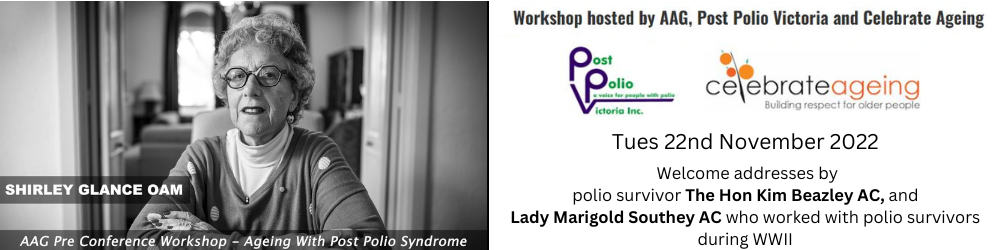
 

This workshop is bringing polio survivors and clinicians from around Australia to call for recognition of the experiences and needs of people ageing with post-polio syndrome. The workshop aim is to improve services. Polio survivors also hope to raise awareness of the need for polio vaccination in the community.

Presenters include polio survivors, allied health, and medical practitioners – with welcome address by polio survivor the Hon Kim Beazley AC and Lady Marigold Southey AC who worked with polio survivors during WWII

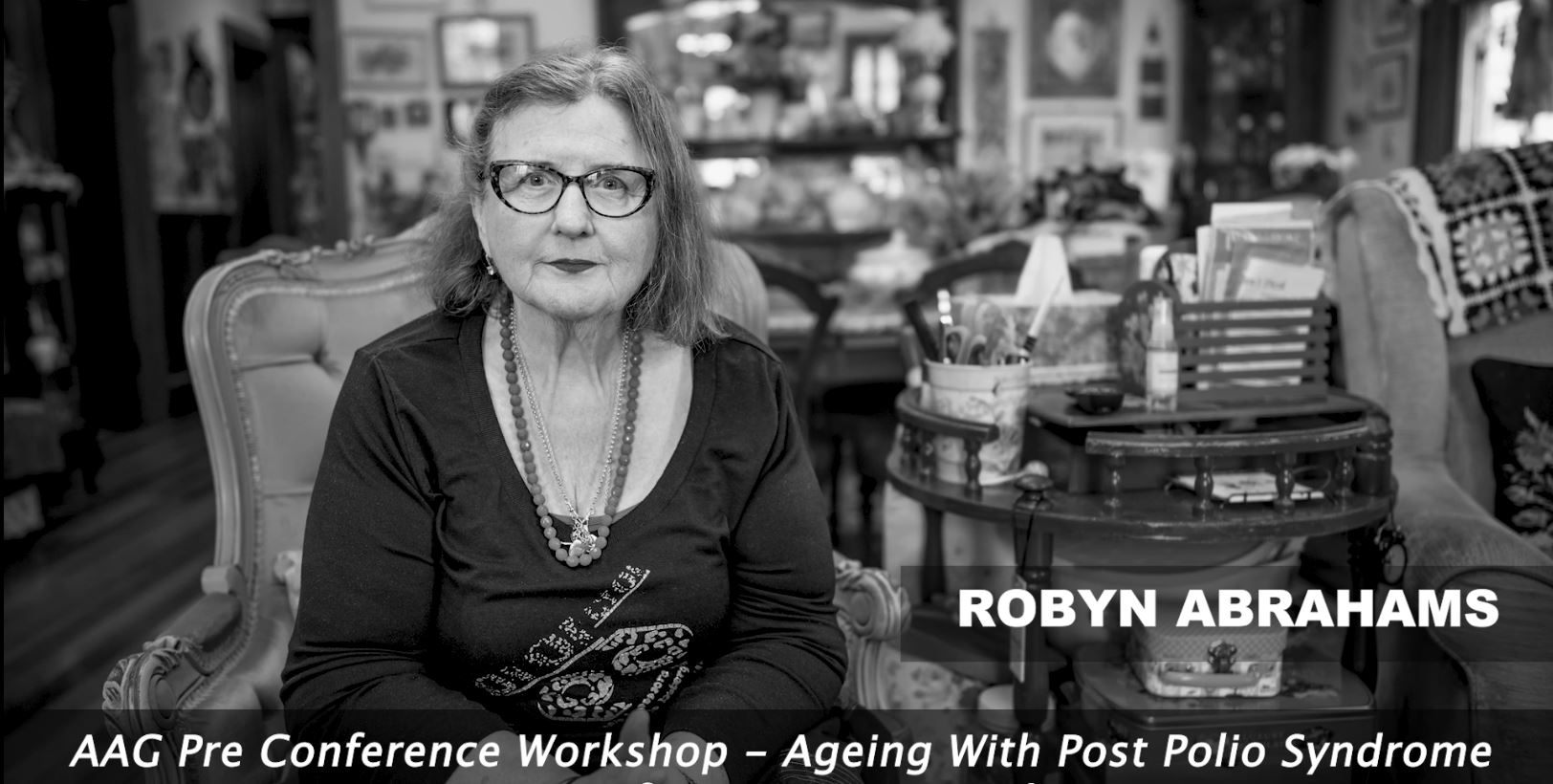
The workshop is being led by older polio survivors. Robyn Abrahams (74) wants health and aged care service providers to understand what older polio survivors have experienced:

I was three when I contracted polio. I was put into an infectious diseases hospital and my mother and father weren’t allowed to visit for months. That was so cruel. We were told being disabled was a sign of laziness. We weren’t allowed to complain, we just had to endure it all. I was in an iron lung for a while.

When we turned 16 the little support we had ended, and we were just supposed to get on with life. It wasn’t until I had a stroke in 2017 that I learned how to pick myself up when I fall. We were never taught that. They didn’t want to know we existed. We have Long Polio and no one is listening to what we need.  

Click here to listen to Robyn in this (<1 min) promo video

Workshop coordinator Shirley Glance OAM, is President of Post Polio Victoria, said

There was so much stigma around polio; people didn’t want to say they had it in those days. We were told we didn’t have a disability, even though we had trouble walking. We just had to put up and shut up. We weren’t allowed to be disabled. Some of us now have Post Polio Syndrome, which causes progressive muscle weakness, pain and fatigue. We need help and we need service providers to understand what we need. That’s why this workshop is so important.

Click here to listen to Shirley in this (<1 min promo video)

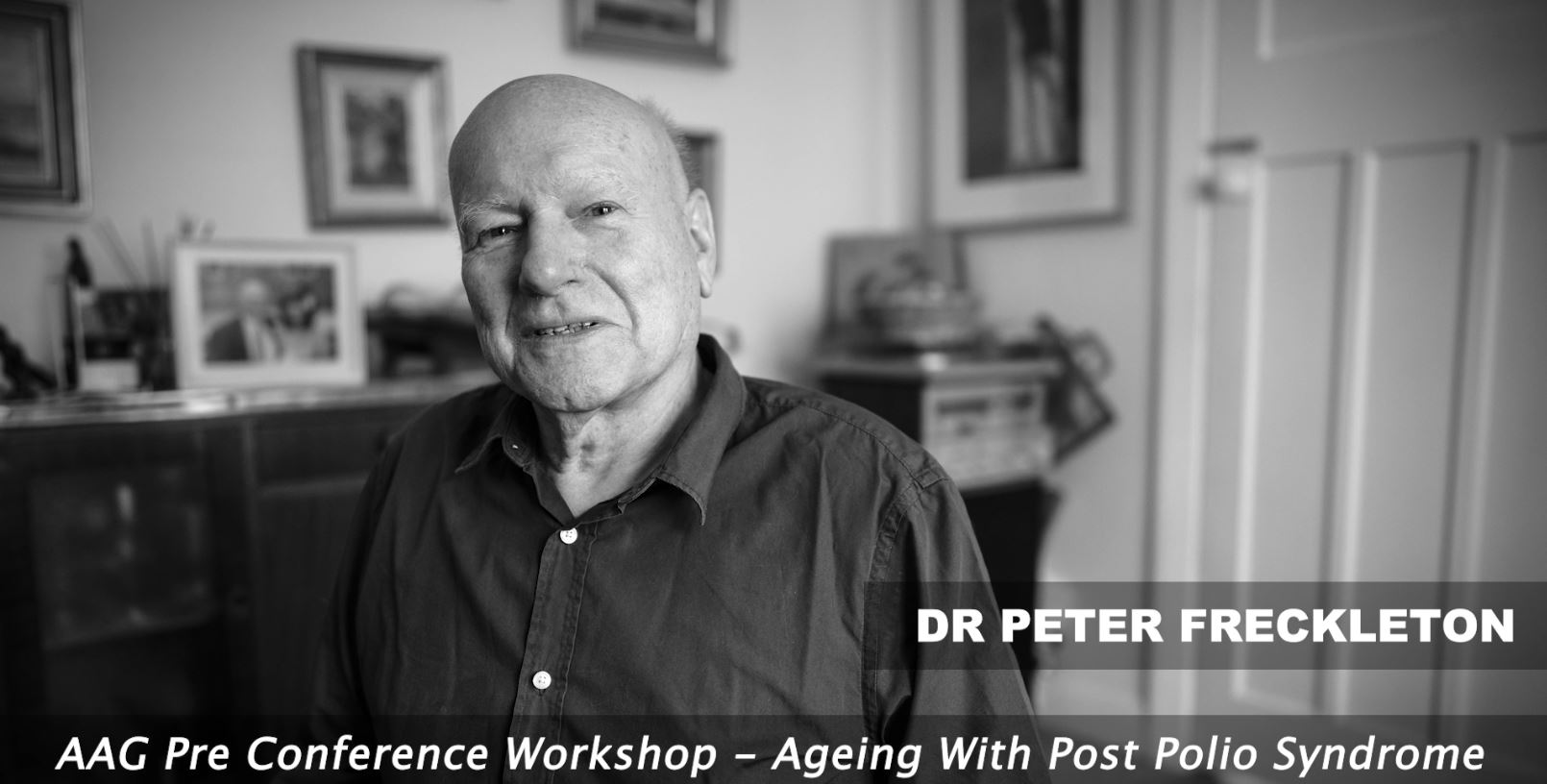
Dr Peter Freckleton will share he experiences at the workshop, noted

We have been fighting all our lives to get the support we need, and we are still fighting now. Some people with polio denied their disabilities and didn’t apply for NDIS. Now they are struggling to get the support they need through My Age Care and will end up prematurely in residential aged care. We want our disabilities recognised and we want to be supported.

We also want to say to the community – have the polio vaccine. Polio is now rebounding due to under vaccination. If people think having the vaccine is worse than getting polio, they need to take a walk in our shoes. Ageing with polio is difficult. Prevention is better than cure, and in this case their isn't even a cure, so get vaccinated.

Click here to listen to Peter in this (<1 min promo video)

AAG will produce a policy paper to educate service providers, policy makers, researchers and the broader community.

Click here for more information about this workshop and others

Vale Courtney Hempton  

AAG was shocked and saddened to be informed of the death of AAG member Courtney Hempton, who suddenly passed away last week. It is devastating news, and she will be greatly missed. Courtney worked closely with AAG in particular with AAG National and the AAG SECG as she one of the main members of the Emerging Researchers in Ageing (ERA) as the ERA coordinator. ERA convener Dr Matthew Carroll expressed his shock, as Courtney “was the beating heart of ERA but importantly we lost a wonderful human”.

Our condolences to Courtney’s family.


Thank you again to our host state - South Australia

 
You must accept cookies to view this content.

Thank you to our sponsors and supporters


Destination Partners